

10-Minute Arm Routine: Fast Gymshark, Fitness, Workout, Training, Plan with Dumbbells
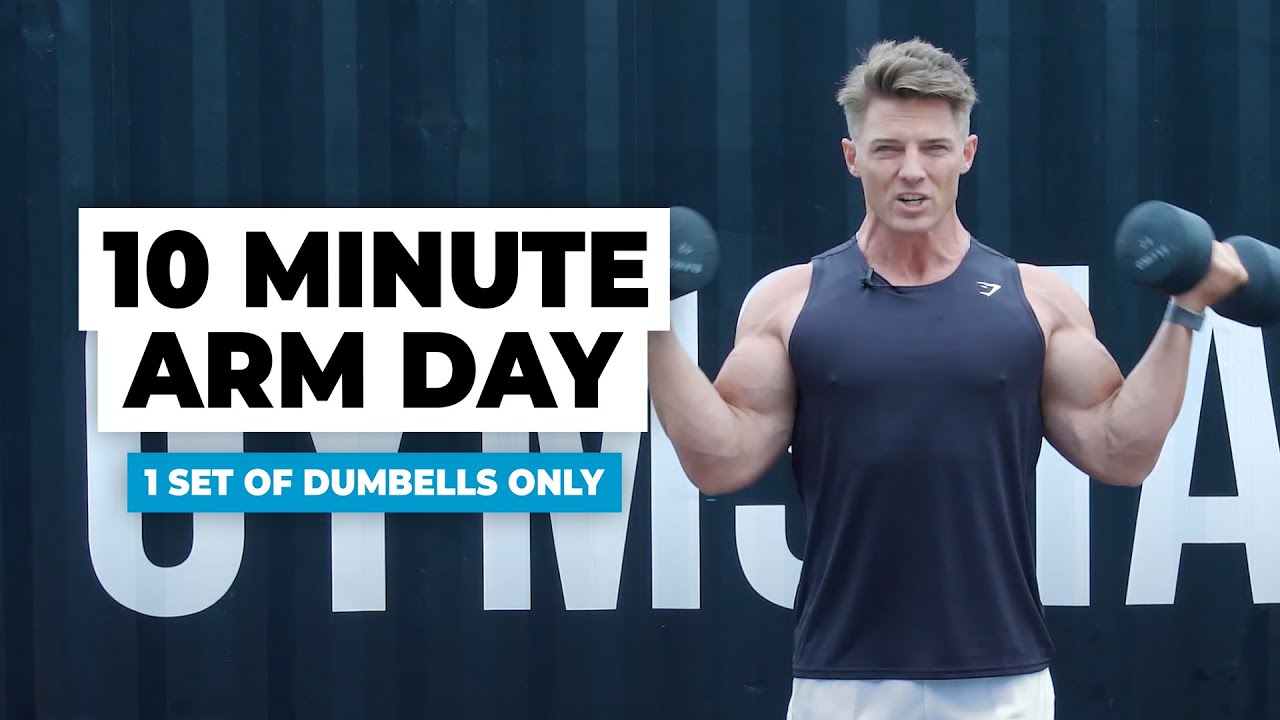
Gymshark, Fitness, Workout, Training, Whether you’ve got time for a full session or you need a last-minute pump before heading out, this 10-minute dumbbell arm routine gives you everything you need: focused biceps and triceps work, simple equipment, and maximum results in minimal time. Follow this follow-along plan to add serious pump, sharpen arm definition, and reinforce mind–muscle connection without overcomplicating your programming.
Table of Contents
- Why this 10-minute routine works
- Quick program rules
- 10-minute follow-along workout (exercise-by-exercise)
- Technique cues and common mistakes
- Program variations and progression
- Warm-up and recovery recommendations
- Sample weekly placement
- Equipment and setup checklist
- FAQ
- Wrapping up
- Final tip
Why this 10-minute routine works
Gymshark, Fitness, Workout, Training, This protocol is designed around a classic supersets approach: alternate a biceps movement with a triceps movement. While one muscle group works, the antagonist gets brief recovery, which lets you pack volume into a short window. Each exercise runs 30 seconds on, with roughly 30 seconds rest — a tempo that keeps intensity high, blood flow constant, and time spent efficient.

Key benefits at a glance:
- Gymshark, Fitness, Workout, Training, Efficient 10-minute finishers that complement larger sessions or stand alone on busy days.
- Balanced biceps and triceps emphasis to prevent cosmetic and strength asymmetries.
- All dumbbell-based — easy to do at home, in a hotel, or at any gym.
- High-rep, moderate-weight format that promotes hypertrophy through metabolic stress and controlled eccentrics.
Quick program rules
- Gymshark, Fitness, Workout, Training, Perform each exercise for 30 seconds, then rest ~30 seconds before moving to the next exercise.
- Choose a dumbbell weight you can control for 30 seconds of continuous reps without major breakdown in form.
- Focus on full range of motion, controlled tempo (especially the eccentric), and a firm squeeze at the top of curls and full lockout on triceps.
- Keep breathing steady: exhale on concentric effort (curl up, extend triceps), inhale on the return.
10-minute follow-along workout (exercise-by-exercise)
Gymshark, Fitness, Workout, Training, Below is the exact order and technique cues to follow. Time each exercise for 30 seconds and rest 30 seconds between sets. Move through the full sequence for a single 10-minute finisher.
-
Alternating dumbbell curl (30 sec)
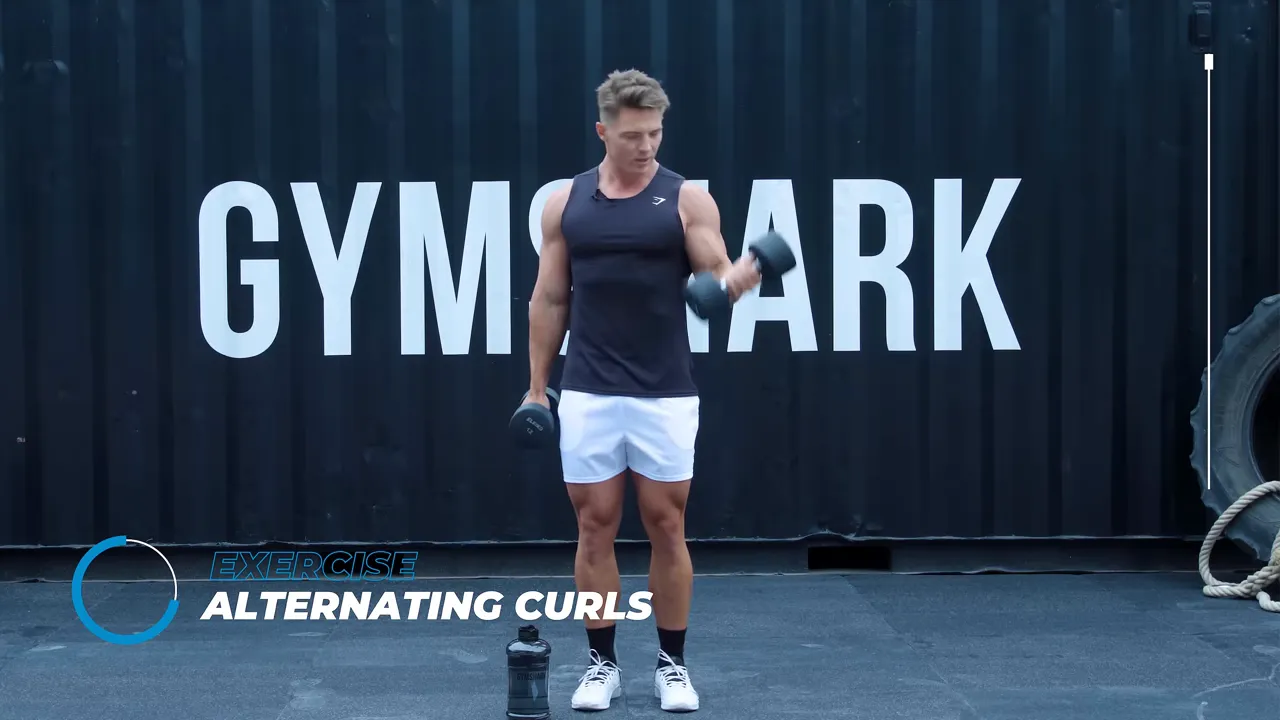
Stand tall and curl one arm at a time, controlling the descent. Stand tall, elbows pinned to your sides. Curl one arm at a time, rotate the pinky slightly outward at the top to enhance the peak contraction, then control the weight back to neutral at the bottom. Small, deliberate reps win here over swinging heavy weights.
-
Overhead dumbbell extension — long head focus (30 sec)

Clear demonstration of the top lockout and wrist rotation for long-head emphasis. Hinge the hands overhead and slightly externally rotate the wrists as you lower to maximize stretch on the long head of the triceps. If your dumbbells feel too heavy, use both hands on a single dumbbell to maintain form. Finish each rep with a solid triceps squeeze at full extension.
-
Wide-grip dumbbell curls (10 to 2 position) (30 sec)

Perform the 10-to-2 wide-grip curl to emphasize the long head of the biceps. Position the dumbbells so you curl in a wider arc (think of the clock face from 10 to 2). This variation shifts emphasis to the long head and outer sweep of the biceps. Control the eccentric and squeeze at the top.
-
Neutral-grip (hammer) curls (30 sec)

Neutral (hammer) curl starting position — wrists neutral, elbows at your sides. Use a hammer grip to hit the brachialis and build thickness between the biceps and forearm. These can be done alternating or simultaneously depending on weight and fatigue — do what allows you to keep tension and avoid momentum.
-
Dumbbell triceps kickbacks (30 sec)

Technique: full triceps kickback with elbow extended and torso braced. Hinge at the hips, maintain a strong tabletop spine, and drive the weight back using only the triceps. Keep the elbows tucked and squeeze the triceps at full extension. This is a high-demand movement for the posterior arm, so prioritize control over range if fatigue sets in.
-
Zottman curls (30 sec)

Curl up with a palms‑up finish, then rotate to lower with palms down. Curl up with a supinated (palms-up) finish, then rotate to pronation on the downward phase. Zottman curls train the biceps concentrically and the forearms eccentrically — a great one-two for arm aesthetics and grip strength.
-
Overhead dumbbell extension — variation (30 sec)

Top lockout position for overhead extensions — clear view of hands behind the head and elbow placement. Repeat overhead extensions with a slight grip variation if desired: neutral to supinated grips change the long-head recruitment and can help you find a stronger position as fatigue builds. Maintain a full stretch and a strong lockout.
-
Across-the-body hammer curls (single-arm) (30 sec)

Across-the-body hammer curl — pull the dumbbell across the torso toward the opposite shoulder. Pull the dumbbell up across your torso toward the opposite shoulder while keeping your elbow pinned. This targets the brachialis and the long head differently than straight hammer curls — expect the burn.
-
Dumbbell concentration curls (single-arm) (30 sec each arm)

Set your elbow on your inner thigh and curl — concentration curl demonstration. One of the best isolation moves for peak development and mind–muscle connection. Sit, brace your elbow against your inner thigh, and curl slowly — no cheating. Do one arm for 30 seconds, rest 30 seconds, then repeat the other side.
Growing up I kept a set of dumbbells under my bed; every night I’d finish with a set of curls and triceps before bed. Small consistent habits build results.
-
Single-dumbbell waiter curl / close-grip partials (final finisher) (30 sec)
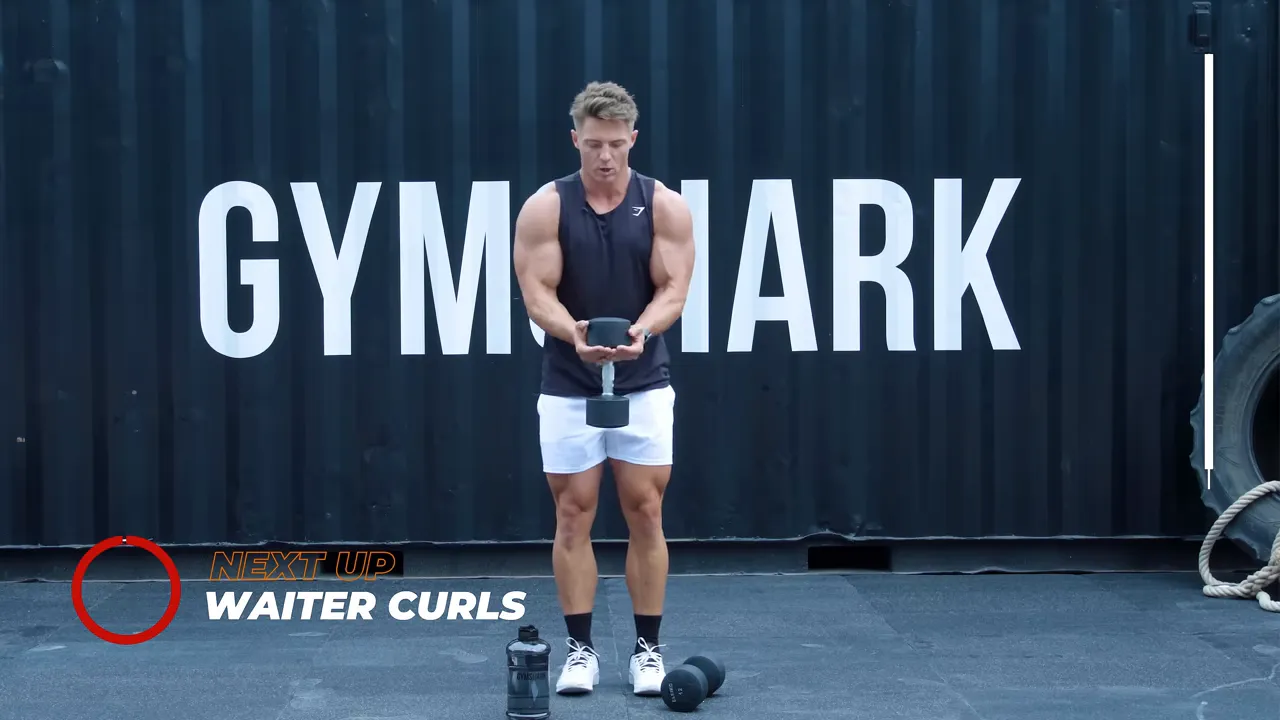
Close‑grip waiter curl position — hold the dumbbell at the head and prepare partials. Grasp a single dumbbell at the head (close grip) and drive short, controlled partials for 5 reps, then hold at the top and lower halfway for another set of partials before finishing with full-range reps. This targets the outer biceps sweep and torches any remaining reserves of energy.
Technique cues and common mistakes
Gymshark, Fitness, Workout, Training, Small technical adjustments make the difference between a good pump and an injury:
- Don’t swing. Momentum transfers tension away from the target muscle and onto joints. Keep the torso stable and strictly hinge or flex only at the joint the exercise is meant to move.
- Control the eccentric. Lowering the weight deliberately increases time under tension and stimulates hypertrophy.
- Elbow position matters. For curls, keep elbows close to the ribcage; for across-the-body movements, keep the elbow pinned to the side to isolate the biceps.
- Protect your lower back on kickbacks by bracing the core and maintaining a neutral spine.
Program variations and progression
Gymshark, Fitness, Workout, Training, This 10-minute template is flexible. Use these options to progress:
- Increase weight progressively while maintaining clean reps — when you can perform all intervals without form breakdown, nudge the load up by 2–5%.
- Add an extra round (20 minutes) 1–2 times per week if you want more volume; be mindful of recovery.
- Swap exercises to focus on weaknesses: replace Zottman curls with incline dumbbell curls to emphasize long-head stretch, or swap kickbacks with skull crushers if you have a bench and want heavier triceps load.
Warm-up and recovery recommendations
Gymshark, Fitness, Workout, Training, Even for a short finisher, a quick warm-up helps: 3–5 minutes of light cardio and dynamic shoulder/elbow mobility primes the joints. After the session, perform light arm swings, banded triceps stretches, and foam rolling as needed. Nutrition and sleep are still crucial — the pump looks great, but muscle growth happens with recovery.
Sample weekly placement
Gymshark, Fitness, Workout, Training, Use this 10-minute arm finisher in several ways:
- After upper-body days as a targeted add-on.
- As a stand-alone arm session on a busy day — 10 minutes is all you need for a high-quality stimulus.
- Up the frequency to 2–3 short finishers per week for accelerated arm development, rotating exercise choices to avoid adaptation.
Equipment and setup checklist
- One pair of dumbbells (or adjustable set)
- Flat bench or chair for concentration curls
- Timer or stopwatch to keep strict 30/30 intervals
FAQ
How heavy should my dumbbells be for this 10-minute routine?
Choose a weight you can control for the full 30-second work interval without swinging. You should be able to perform moderate reps with tight form; the last few reps should be challenging but not an all-out failure. If you can’t maintain form, reduce the weight.
Can I do this routine daily?
Short answer: you can, but listen to your body. Doing this as a light daily pump is okay once recovery and joint health are monitored. For hypertrophy and strength gains, 2–3 focused arm sessions per week combined with adequate rest is the most productive approach.
Do I need to supersede this with a full-arm day to see growth?
No; consistent, focused volume is what matters. This 10-minute finisher provides effective stimulus if paired with compound lifts (rows, presses) during the week. If you want additional volume, add an extra round or a full-arm day once weekly.
What if I don't have a bench for concentration curls?
You can perform concentration curls seated on a chair and brace your elbow against your inner thigh, or do standing one-arm preacher-style curls using the opposite knee for support. The goal is to lock the elbow in place to eliminate cheating.
How should I breathe during curls and extensions?
Exhale during the concentric (curl up or extend) and inhale on the eccentric return. Steady breathing helps maintain intra-abdominal pressure and reduces unnecessary tension in neck and shoulders.
Are partial reps like the waiter curl effective?
Yes. Partials increase time under tension in a specific range where the muscle is strongest or where you want additional stress. The waiter curl partials in the top half emphasize the biceps’ peak and outer sweep — perfect for a finishing burnout.
Wrapping up
Gymshark, Fitness, Workout, Training, This 10-minute dumbbell arm routine is intentionally simple and brutally effective: alternating biceps and triceps work for consistent blood flow, isolation to exhaust target tissue, and compact intervals that respect your schedule. Whether you’re dressing up for a night out or stacking small wins toward a bigger physique goal, this finisher is a dependable tool to keep in your training toolbox.
Get your timer, pick your weight, and prioritize controlled reps. If you want strength and size, be consistent with sessions, track progression, and recover thoroughly between workouts.
Final tip
Gymshark, Fitness, Workout, Training, The pump is immediate motivation; think longer-term progression — small, daily decisions stack into dramatic results. Add this routine two to three times per week, gradually increase load or reps, and dial in nutrition and sleep. That’s where the gains live.